> For the complete documentation index, see [llms.txt](https://docs.infotopics.com/llms.txt). Markdown versions of documentation pages are available by appending `.md` to page URLs; this page is available as [Markdown](https://docs.infotopics.com/supertables/features/dynamic-aggregation.md).
# Dynamic Aggregation
{% hint style="info" %}
This guide is for **Tableau** only.
{% endhint %}
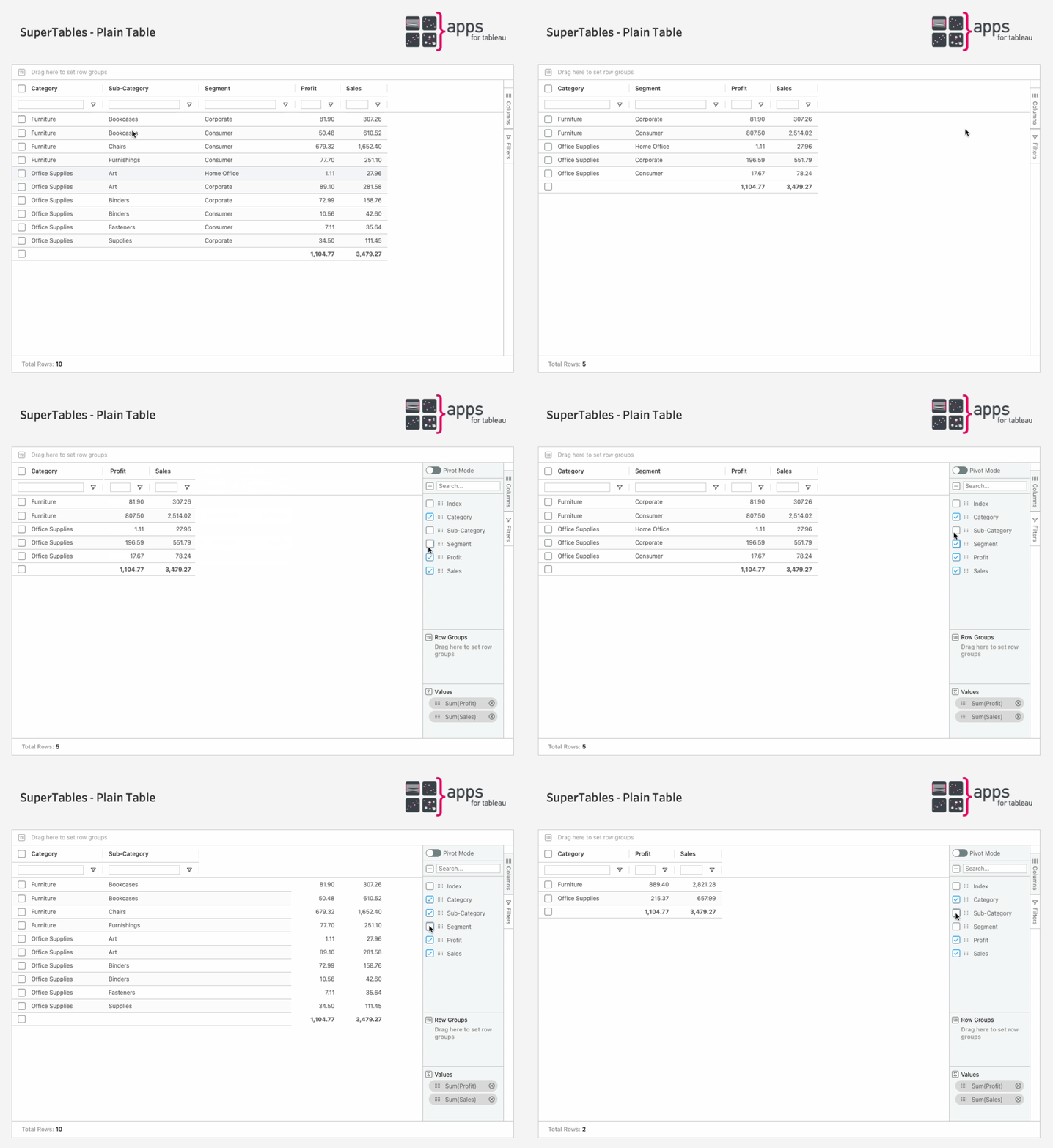
We combine the power of Tableau Parameters and visible columns in SuperTables. By doing this we will automatically remove / add detail from the datasheet which results in a different level of aggregation. With this incredible feature you only query the data you are looking at, and Table Calculations / LOD calculations will also keep working like you expect! On top of that you benefit from a performance boost!
#### Dynamic Aggregation V2 (SuperTables 5.5.1+)
We have introduced an easier and faster way of setting up dynamic aggregation which only requires 1 parameter! Please find attached workbook for an example:
{% file src="/files/6QkKITxEaQ8Of3UQTQb8" %}
#### Set up Dynamic Aggregation V2
* 1\. Create a string parameter with allowable values on 'All', and select it in the dropdown above. For example: My Parameter
* 2\. Create a calculated field for the dimension you want to auto aggregate. For example: 'My Ship Mode'
* 3\. Use this calculation:\
IIF(CONTAINS(\[My Parameter], "|My Ship Mode|"), \[Ship Mode], "\_")\
Optional: Surround the name of the calculation in "|" to ensure unique column selection
* 4\. Remove the original \[Ship Mode] from the datasheet.
* Tip: If you want to reuse your current \[Ship Mode] column configuration, rename \[Ship Mode] to something else (i.e. 'Original Ship Mode') and name you calculated field 'Ship Mode'.
#### Set up Dynamic Aggregation V1 (deprecated)
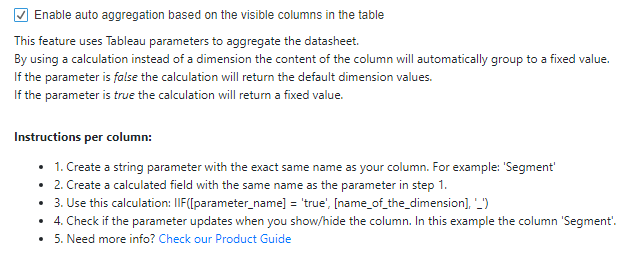
Enter the configuration screen of SuperTables and head to the **Appearance** tab. Under Layout Options tick ‘Enable auto aggregation based on the visible columns in the table’
**Our example:**
1\. Create a string parameter with the exact same name as your column. For example: ‘Category’\
2\. Create a calculated field with the same name as the parameter in step 1.\
3\. Use this calculation: IIF(\[parameter\_name] = ‘true’, \[name\_of\_the\_dimension], ‘\_’)\
4\. Check if the parameter updates when you show/hide the column. In this example the column ‘Category’.
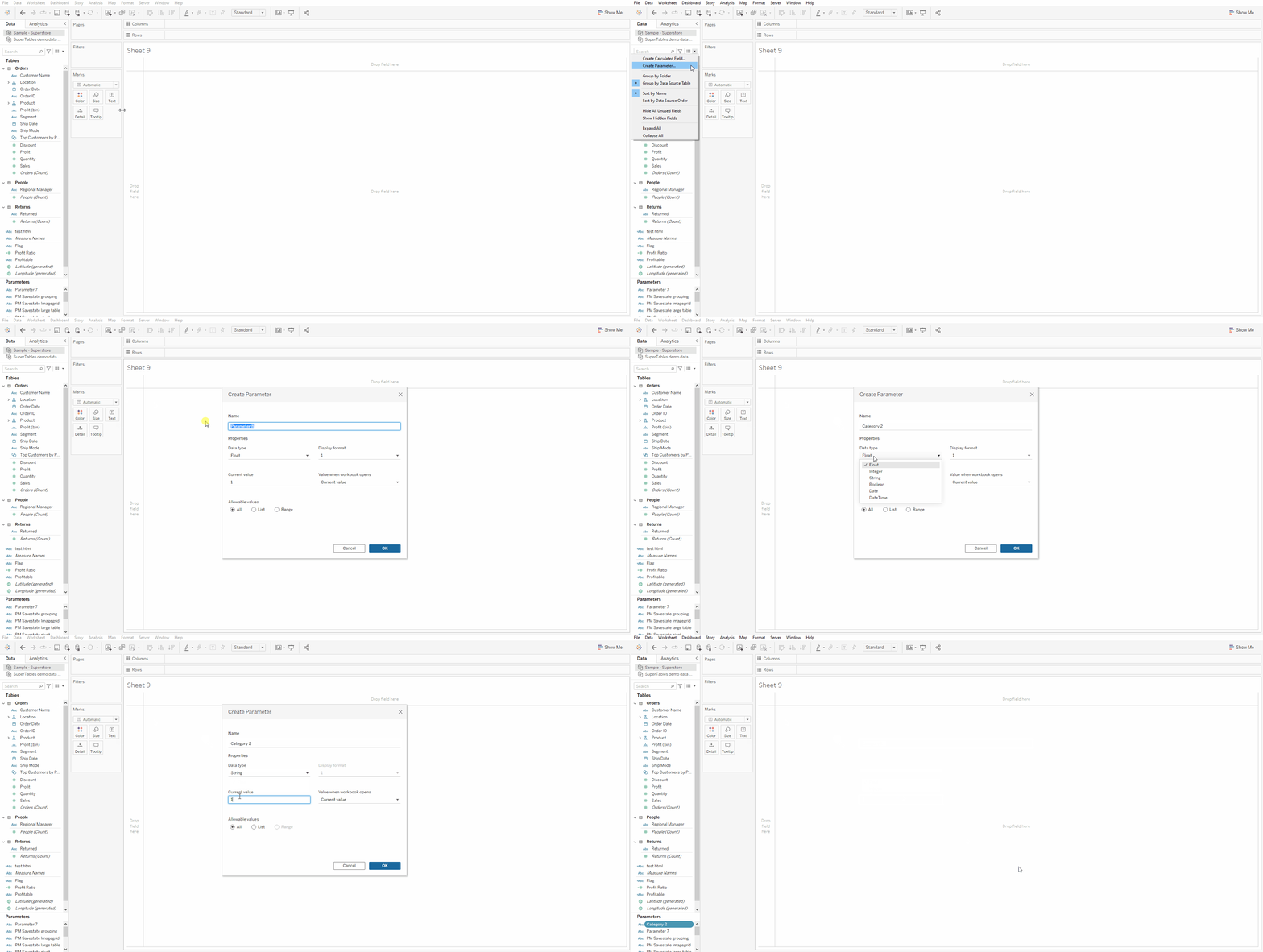
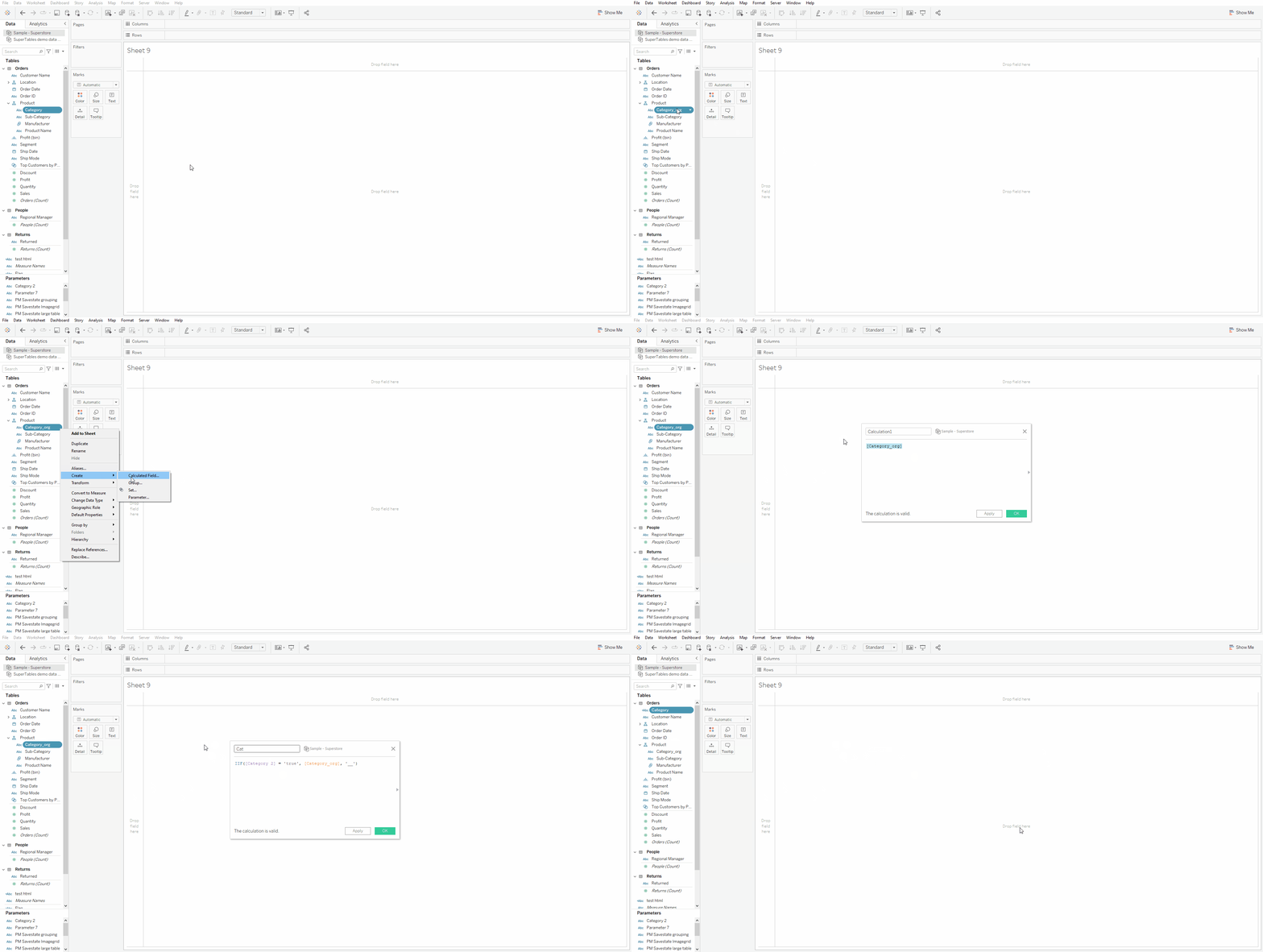
Next create a parameter of type ‘string’ with the current value ‘true’ as next we will be creating a calculated field. Follow our GIF to set up the calculated field.
**Parameter:**
**Calculated Field:**
All done, reload the extension to implement the dynamic aggregation to your SuperTable!
---
# Agent Instructions
This documentation is published with GitBook. GitBook is the documentation platform designed so that both humans and AI agents can read, navigate, and reason over technical content effectively. Learn more at gitbook.com.
## Querying This Documentation
If you need additional information that is not directly available in this page, you can query the documentation by asking a question.
Perform an HTTP GET request on the following URL with the `ask` and `goal` query parameters:
```
GET https://docs.infotopics.com/supertables/features/dynamic-aggregation.md?ask=&goal=
```
`ask` is the immediate question: it should be specific, self-contained, and written in natural language.
`goal` is what the user is ultimately trying to achieve, the reason they need the answer. Sharing it helps GitBook give you a better, more relevant answer. A goal is most helpful when it describes the outcome the user wants rather than restating the question. For example, with `ask=how do I create an API token`, a goal like `automate deployments from our CI pipeline` lets GitBook tailor the answer to that use case.
The response will contain a direct answer to the question and relevant excerpts and sources from the documentation.
Use this mechanism when the answer is not explicitly present in the current page, you need clarification or additional context, or you want to retrieve related documentation sections.