> For the complete documentation index, see [llms.txt](https://docs.infotopics.com/llms.txt). Markdown versions of documentation pages are available by appending `.md` to page URLs; this page is available as [Markdown](https://docs.infotopics.com/supertables/configuration/configuration-screen/appearance-tab/multiple-layouts.md).
# Multiple Layouts
SuperTable enables users to create and store multiple custom layouts for quick access. For instance, a user might arrange specific columns in a preferred order in one layout. This functionality allows users to use pre existing layouts without starting from scratch and to easily swap between layouts. Here’s a guide on how to create and store custom layouts:
#### Configuration
Firstly you will need to create two parameters of type string in your worksheet. One for storing the view and one for the layout change. Leave the value empty.
Step 1
#### Create a parameter
First, create **two parameters of type *****String*** in your worksheet:
1. **View parameter**
* Data type: **String**
* Allowable values: **All**
* Current value: *(leave empty)*
2. **Layout parameter**
* Data type: **String**
* Allowable values: **List**
* Values: leave empty for now
Step 2
#### Configure parameter in supertables
Open the **SuperTables configuration screen**. By default, you will land on the **General** tab, the one we need.
In the **Store table layout in** setting, select the **layout parameter** you created earlier. This parameter will store the selected table layout.
Step 3
#### Configure second parameter you created
Next, go to the **Appearance** tab in the SuperTables configuration screen.
Scroll down to the section **Use a parameter to switch between layouts** and enable it.\
Then select the **layout parameter** you created earlier.
Step 4
#### Setup your dashboard - **Show the parameters**
Right-click the parameters you created and select **Show Parameter** to make them visible on the worksheet or dashboard.
All changes made in your **SuperTables** will be saved in your stored parameter. Once you have configured your SuperTable exactly as you want, copy the text shown in your **stored parameter**.
Step 5
#### Layout parameters
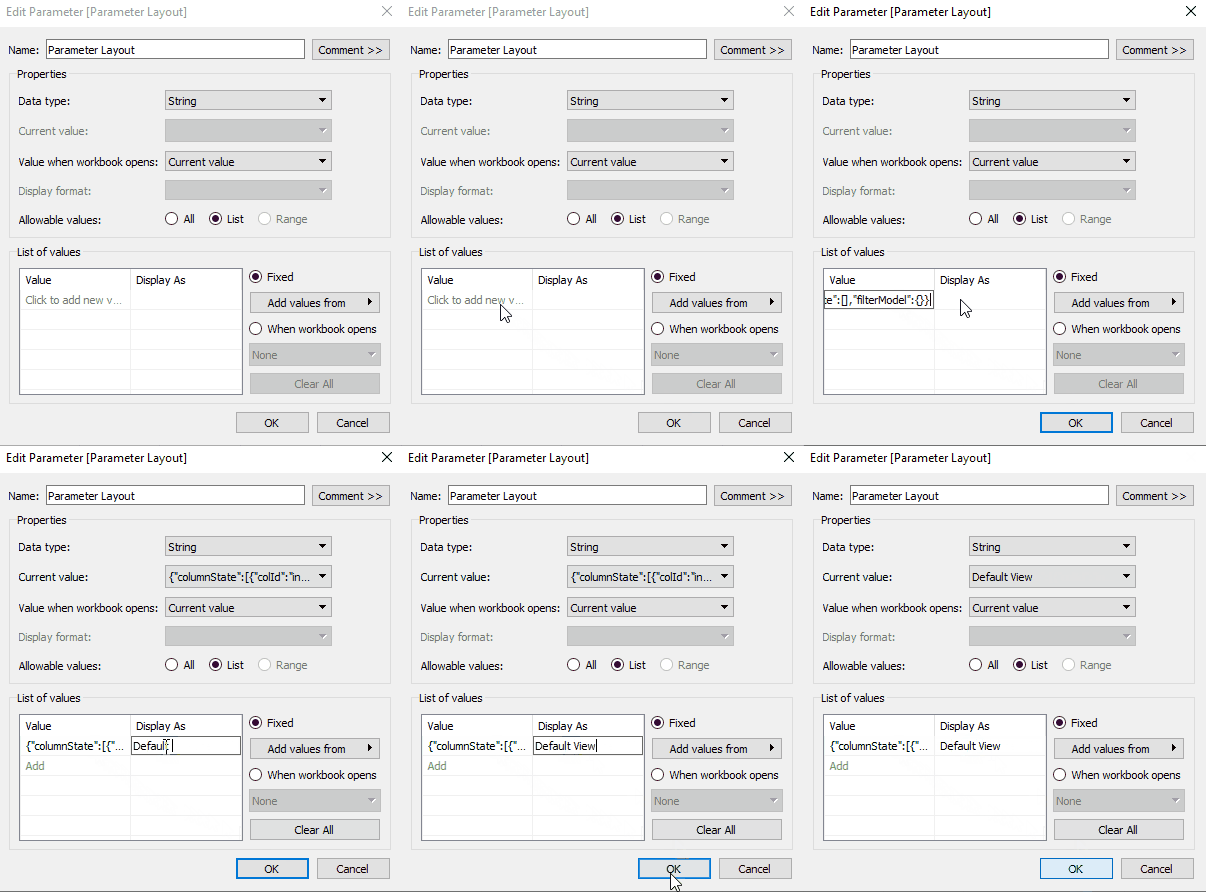
Edit the layout parameter by clicking on the dropdown on the parameter. This is where we will be creating our custom layouts.
Paste your layout as a value in the list and name your custom view.
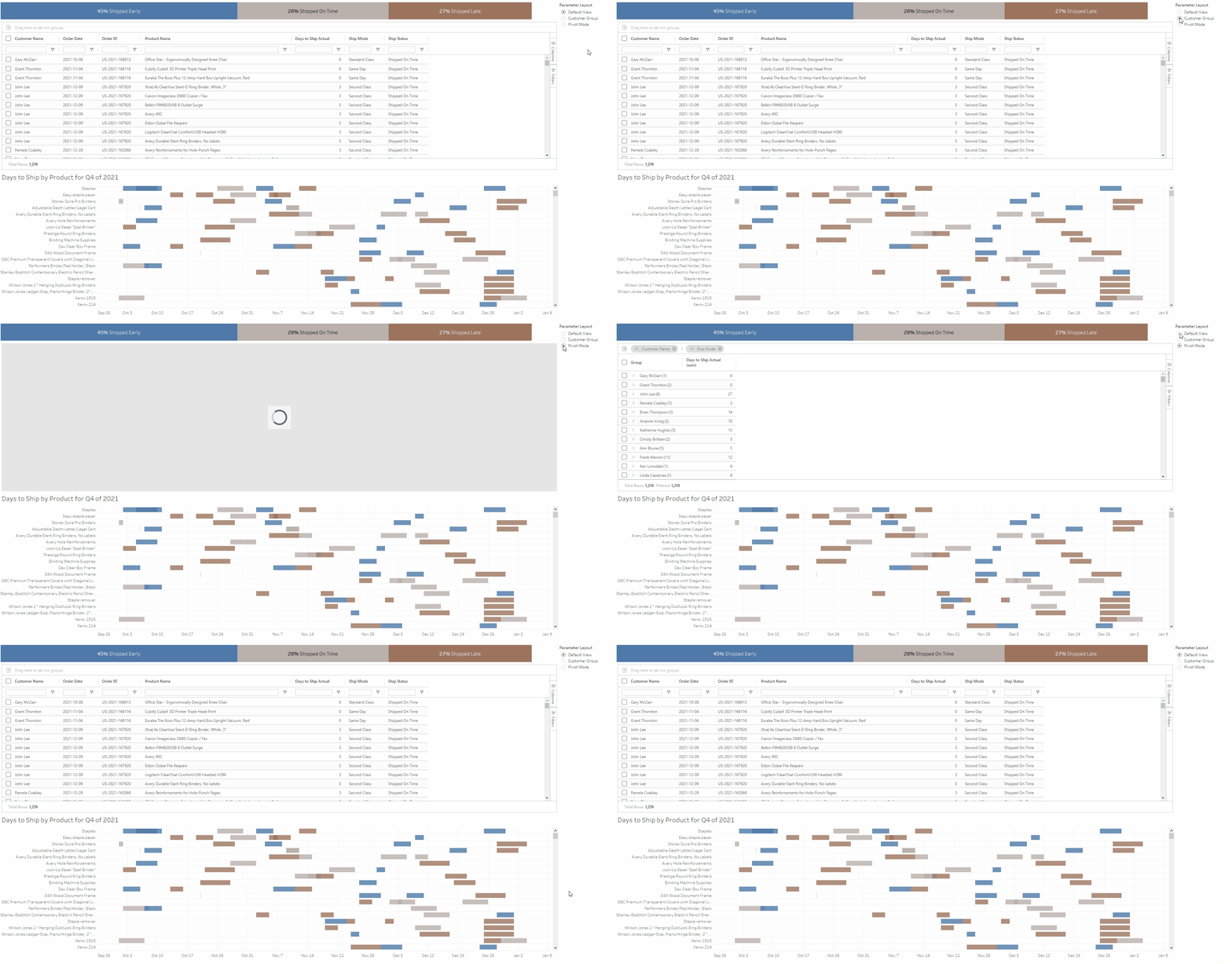
Repeat this process for each new custom view you wish to have on your dashboard. Once you have all the custom views you want, remove the stored layout from your dashboard. You can now click on each view and see an instant change in your SuperTable!
#### Video Tutorial
{% embed url="" %}
---
# Agent Instructions
This documentation is published with GitBook. GitBook is the documentation platform designed so that both humans and AI agents can read, navigate, and reason over technical content effectively. Learn more at gitbook.com.
## Querying This Documentation
If you need additional information that is not directly available in this page, you can query the documentation by asking a question.
Perform an HTTP GET request on the following URL with the `ask` and `goal` query parameters:
```
GET https://docs.infotopics.com/supertables/configuration/configuration-screen/appearance-tab/multiple-layouts.md?ask=&goal=
```
`ask` is the immediate question: it should be specific, self-contained, and written in natural language.
`goal` is what the user is ultimately trying to achieve, the reason they need the answer. Sharing it helps GitBook give you a better, more relevant answer. A goal is most helpful when it describes the outcome the user wants rather than restating the question. For example, with `ask=how do I create an API token`, a goal like `automate deployments from our CI pipeline` lets GitBook tailor the answer to that use case.
The response will contain a direct answer to the question and relevant excerpts and sources from the documentation.
Use this mechanism when the answer is not explicitly present in the current page, you need clarification or additional context, or you want to retrieve related documentation sections.


 Repeat this process for each new custom view you wish to have on your dashboard. Once you have all the custom views you want, remove the stored layout from your dashboard. You can now click on each view and see an instant change in your SuperTable!